How to Actually Finish Your First Game in Unreal Engine
Want to finish your first game in Unreal Engine but keep abandoning projects? This guide covers the exact game types to avoid as a beginner, what simple games actually work in Unreal, and how to go from zero to shipped.

You want to make a game in Unreal Engine. You have had this goal for a while now. Maybe you have already started a project or two, watched a ton of YouTube tutorials, and feel like you are learning but somehow, nothing ever gets finished.
You are not alone. This is the most common story in game development.
The good news is that your problem probably isn't skill. It isn't Unreal Engine being too complex. It isn't that you don't have enough time. The real reason most people never finish their first game is that they chose the wrong game to start with.
This article is going to fix that.
Why Unreal Engine Makes This Worse (Not Better)
Unreal Engine is one of the most powerful game engines on the planet. It is used to make open world RPGs, AAA shooters, cinematic experiences, and games with physics systems so complex they take entire teams years to build.
That power is also a trap.
When you fire up Unreal Engine for the first time and see what it can do, your imagination goes to work immediately. You start thinking about the game you really want to make. The one with the sweeping open world, the branching dialogue, the dynamic weather system, and the deep crafting mechanics.
Then you start building it. And three months later, you have a grey box level, one character that can walk around, and a growing sense of dread that this project is never going to be finished.
The engine didn't fail you. Your scope did.
The One Thing That Will Actually Get You to Ship
Finish something small. I know you have heard this before. But I want to be specific about what "small" actually means, because vague advice is useless.
Small does not mean an open-world game with only two biomes. Small does not mean an RPG with just three character classes. Small means a game where you can describe the entire core loop in one sentence and build a playable version in a few weeks.
Here is the sentence test. Can you describe your game like this?
"The player shoots enemies that come in waves, the waves get faster each round, and the game ends when the player dies."
That is a game. That is finishable. That is what your first project should be.
Where Unreal Engine Students Actually Get Stuck
I have taught Unreal Engine to over 1,800 students. I see the same patterns come up again and again not because those students lack talent, but because Unreal Engine has genuinely incredible tools that are genuinely terrible ideas to touch on your first project. The engine practically invites you to go bigger than you should.
Here is where people lose months.
They open Sequencer. Unreal's cinematic tool is extraordinary. It is also the moment a game stops being a game and starts being a film project. The second you build one cutscene, you need two more to bookend it, and suddenly you have a narrative to support. Sequencer is for your third or fourth project. Close the tab.
They set up a dialogue system. Whether it is hand-rolled or pulled from the Marketplace, a dialogue system is a direct route to scope hell. Characters who talk need things to say. Things to say need a story. A story needs a structure. Before long you are writing a three-act screenplay instead of building a game. If your characters need to speak, your project is already too big.
They open Behaviour Trees to make smart AI. Unreal's AI toolset Behaviour Trees, Blackboards, EQS is deep and genuinely interesting to learn. It is also a system where you can spend three months making enemies incrementally smarter with almost no noticeable improvement to how fun the game actually is. For your first game, enemies should move in a straight line or a fixed pattern. That is enough. Save Behaviour Trees for when the rest of the game is already working.
They try to make an open world game. Unreal 5 makes this feel dangerously achievable. Nanite, Lumen, World Partition the engine practically unrolls a red carpet toward open world development. Do not walk down it. An open world is only as good as the content inside it, and filling a map with enough to make exploration feel worthwhile is a production challenge that has sunk entire studios with full teams behind them. If the core loop is not fun in a single small arena, it will not become fun just because the arena is bigger. Build something that works in one room first.
They try to make an RPG. This is the dream project for a huge portion of people who get into game development, and Unreal has enough tools to make it feel like a real possibility inventory systems, stats, save games, dialogue, quests, skill trees. Each one of those systems is a project on its own. An RPG asks you to build all of them at once, plus combat, plus a world, plus a story to tie it together. I have watched students spend eighteen months on RPG projects and never reach a point where the game is actually playable from start to finish. Save it. Make it your fifth game, not your first.
So What Should You Make?
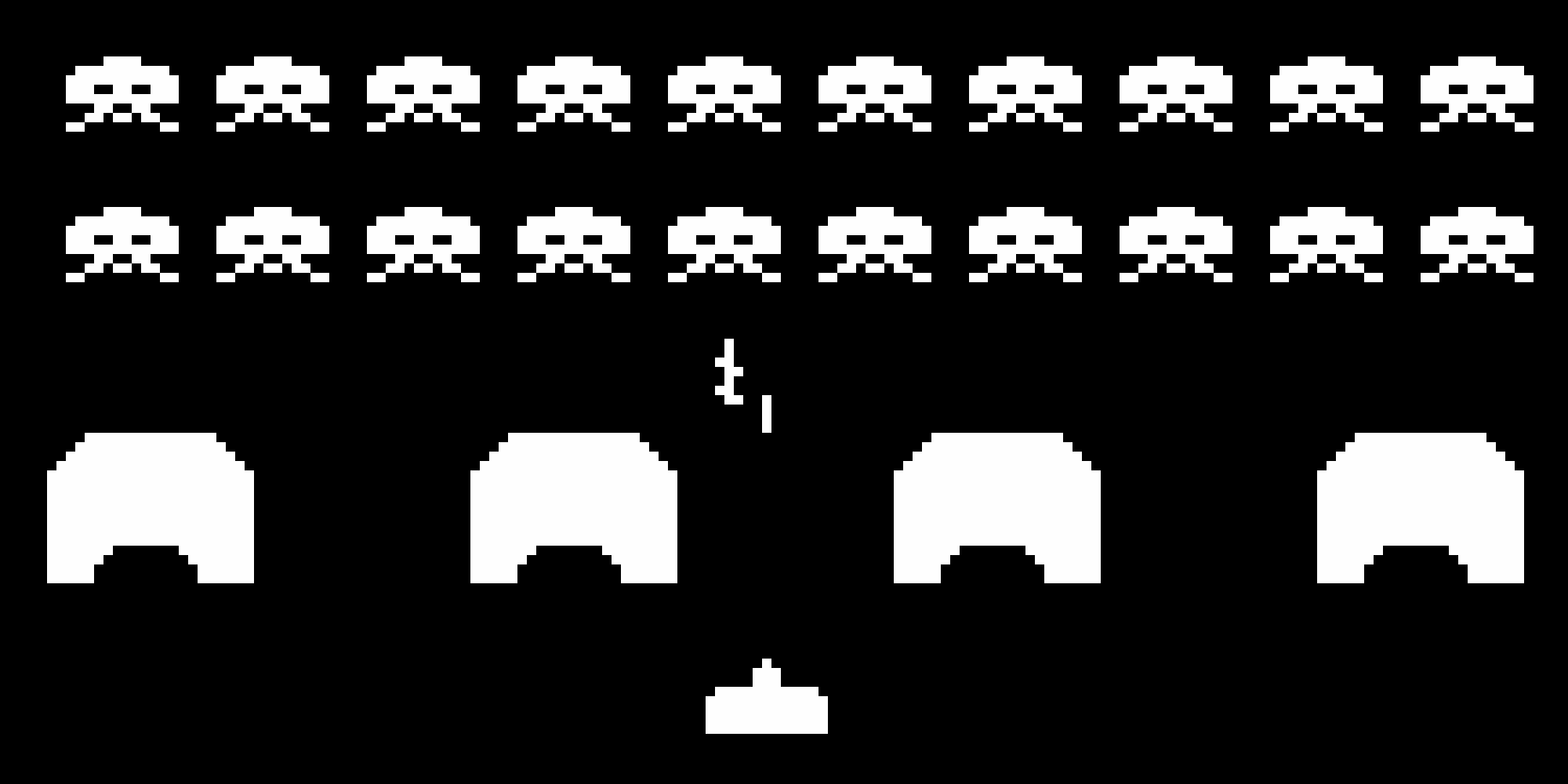
Look at the arcade era. Games made between roughly 1972 and 1985 are a goldmine for first project inspiration not because they are old, but because technical constraints forced their designers to build tight, finishable loops.
These genres are genuinely good starting points:
- Shooters — Space Invaders, Galaga, Asteroids. Enemies move in patterns. Player shoots. Waves get harder. Done.
- Collision / ball games — Pong, Breakout. Simple physics, clear win/lose condition.
- Collector games — Pac-Man, Snake. Clear objective, ramping difficulty.
- Obstacle courses — Frogger. Avoid things. Get to the end. Repeat, faster.
- Generative puzzle games — Tetris, Minesweeper. Algorithmic difficulty, no handcrafted levels needed.
- Top down shooters — Robotron, Gauntlet. Move, shoot, survive. Very buildable in Unreal.
Notice what these have in common. The player goal is always one of: get the highest score, kill everything on screen, collect everything on screen, or arrange things on screen. No story. No dialogue. No cutscenes. Just a loop that gets harder.
More modern games that follow this same principle: tower defense games, Fruit Ninja, Bejeweled, Doodle Jump, Plants vs Zombies. The core loop is simple. The polish is what makes them feel modern.
How Unreal Engine Actually Helps Here
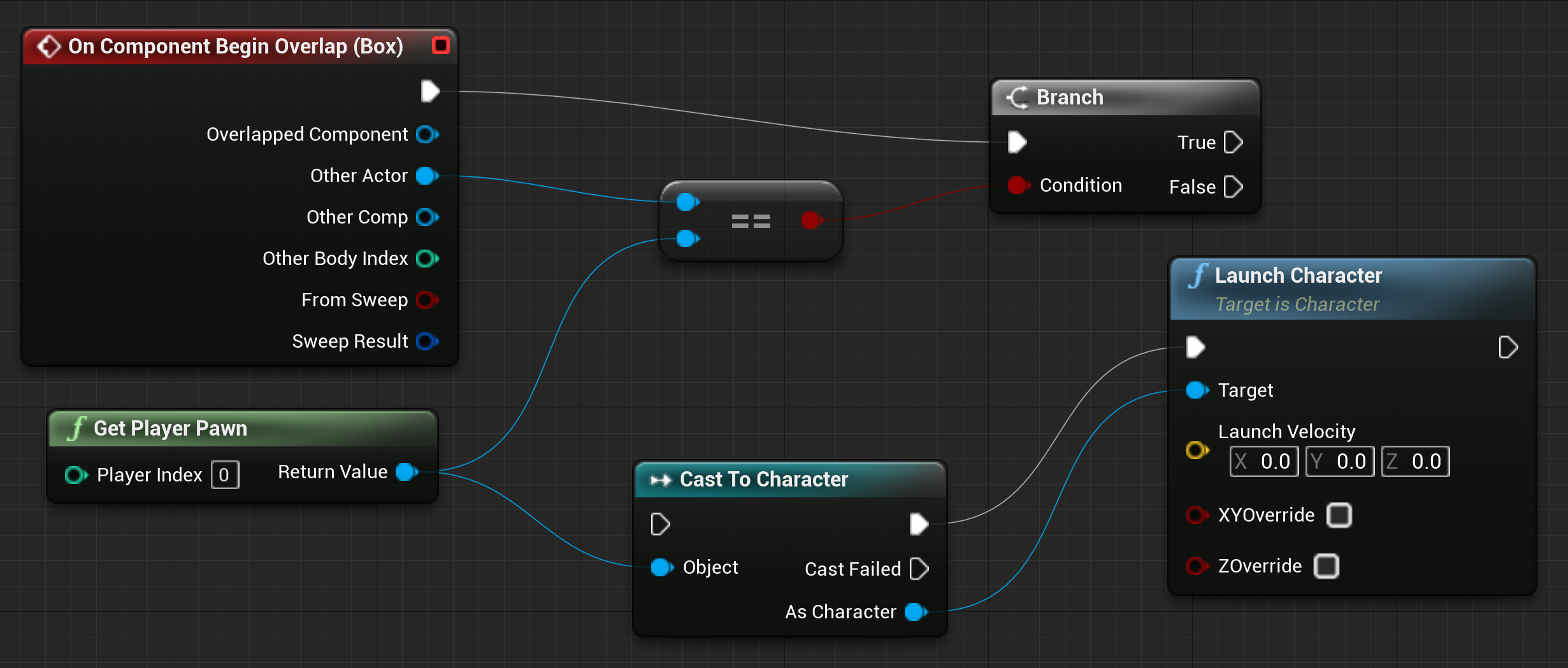
Here is the good news. Unreal Engine is extremely well suited to building these kinds of games quickly, especially without writing code.
Blueprints — Unreal's visual scripting system let you build game logic by connecting nodes rather than writing C++. For a Pong clone, a top-down shooter, or a wave-based arcade game, Blueprints are more than capable of handling everything you need. You can get a playable prototype running in a weekend.
Unreal also gives you Niagara for particle effects, a powerful audio system, and an incredibly capable materials editor. This means you can take a mechanically simple game and make it feel fantastic without the scope expanding out of control. Add screen shake. Add satisfying hit effects. Add an escalating music track. The game is still simple underneath it just looks and sounds great.
This is sometimes called "juice" in game development circles. Polish and visual feedback can make a basic game feel incredibly satisfying to play. In Unreal, you have some of the best tools in the industry to add that juice on top of a simple core.
Ship It. Even If It Is Not Perfect.
There is a difference between a game sitting on your hard drive and a game that is actually out in the world.
Even if your first game is rough, release it. Put it on itch.io. Charge a small amount for it or release it free but publish it publicly. The moment you do that, something changes in how you approach the work. There is a social pressure that kicks in. You try harder. You fix the things that embarrassed you. You actually finish it.
Most aspiring developers never get here because they are waiting for the game to be "good enough." It will never feel good enough. Ship it anyway.
Every game you see from developers who have shipped multiple titles they all started with something small and imperfect. The act of finishing and releasing is the skill you are actually trying to develop. The game is just how you practice it.
Ready to Build? Here Is Where to Start
If you want a structured path to actually building and shipping games in Unreal Engine not just watching tutorials and forgetting them I put together Unreal University.
The course takes you from complete beginner to shipping real games without writing a single line of code. We go through Blueprints, materials, animation, audio, and more and then apply all of it by building five complete games from scratch: Pong, Brick Breaker, Flappy Bird, a 2D Platformer, and a Top Down Shooter.
These are exactly the kinds of games this article talks about. Simple, finishable, genuinely satisfying to build and by the end you will have shipped something real and have the skills to go bigger next time.
Over 1,800 students are already enrolled. It is one payment for lifetime access, and it includes a 30 day money-back guarantee.
Your first finished game is closer than you think. You just need to pick the right one to start.